Selasa, 20 Desember 2005

Cezanne Still Life at MoMA


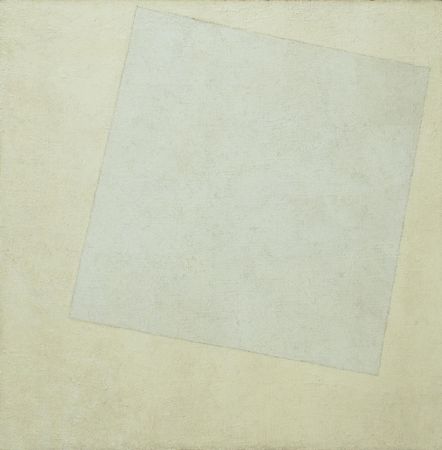
Here's another podcast from yesterday's trip to MoMA -- about Cezanne's Still Life with Apples (1895-8). And like with the Malevich White on White, we ask what it is about Cezanne's paintings that make them great -- and that make his work such a critical linchpin between the nineteenth and the twentieth century.

Right click here to download the mp3.


Senin, 19 Desember 2005

Branching out to MoMA - Malevich Podcast


Kazimir Malevich, Suprematist Composition: White on White (1918)

Today, we continued creating podcasts / audioguides -- this time for works of art in the Museum of Modern Art. We tried hard to stay away from lecturing, which isn't always easy. MoMA encourages visitors to create their own audioguides and they post their audioguides on their website. It is interesting to compare our podcast (in the form of a conversation) with MoMA's approach.

Right click here to download the mp3 or use the player below to listen.


Kamis, 15 Desember 2005

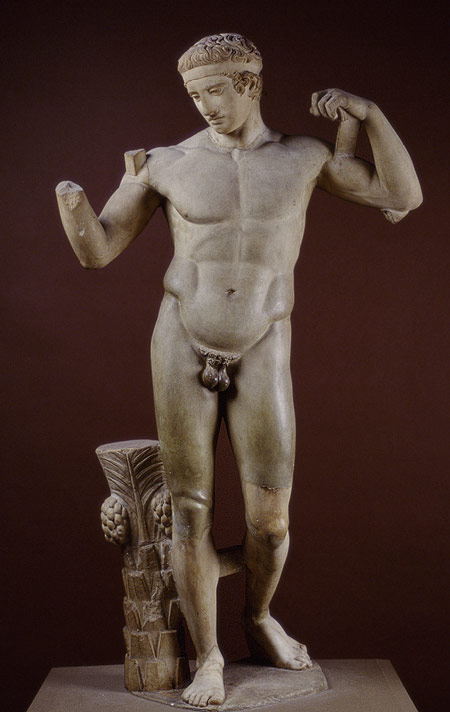
A Roman copy of an ancient Greek Sculpture at the Met


Here is our podcast of this Roman (marble) copy of an ancient Greek (bronze) sculpture by the famous artist Polykleitos. The original bronze was sculpted during the classical period. Polykleitos was interested in a "canon" of proportions that would dictate how the human body should be represented at its most perfect and harmonious. This harmony was found both in the position of the figure (in perfectly balanced contrapposto) and in the harmonious relationship of the parts to the whole. This is a good example of the ancient Greek interest, during the classical period, in the idealized, young, athletic male body.

Statue of Diadoumenos (youth tying a fillet around his head), ca. 69–96 A.D.

Right click here to download the MP3, or listen using the player below.


Rabu, 07 Desember 2005

Our SUNY TLT Presentation in Summary


We presented a paper this morning titled “Pod and Video-Casting: New Strategies for Teaching with Images” at the annual SUNY TLT conference. In it we traced our interest in pod and vodcasting and began to explore related pedogogic implications. Below are a few of the issues that we raised:

We are intrigued by podcasts for several reasons:
1. We want to use a technology that is ubiquitous in our students’ lives
2. We are interested in the mobility afforded by this technology -- the idea of the "classroom without walls"
3. We suspect it may help solve problems that occur when teaching with images online -- and one problem in particular -- the way we ask students to divide their visual attention between text and image

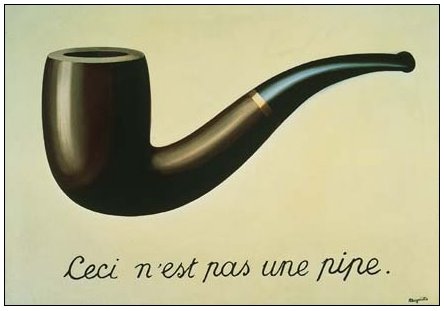
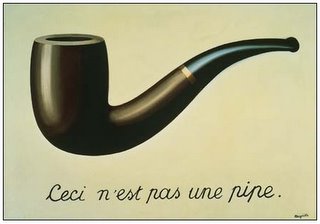
Michel Foucault articulated part of the problem when discussing Rene Magrette’s painting The Treachary of Images,

"Either the text is ruled by the image… or the image is ruled by the text… What happens to the text of the book is that it becomes merely a commentary on the image… and what happens to the picture is that it is dominated by the text… What is essential is that [textual] signs and visual representations are never given at once. An order always hierarchizes them…."

The image is of a pipe, but the text tells us that this is not in fact an actual pipe. And the text wins out -- this is not a pipe, it is only a representation of a pipe. The text is the authority, it has a certainty that the image – even in all its clarity and precision -- lacks. And this is a certainty that we are reassured by, never mind that the text is no less a representation than the image. Since Moses (laws in hand) confronted his brother Aaron (golden calf not quite in hand), the immutability of text has held far more authority than the image with its ambiguous meanings and myrid interpretations.
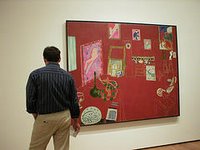
From "stepinrazor" at Flickr

Never is this more true than in a museum where viewers can spend more time looking at a wall label than at the object that they are presumably there to see. In museums, in textbooks, in any environment where text and image coexist, does the text overwhelm the process of seeing? Do we stop seeing when we read? Do we only see what we have read about? Do we look only for what we’ve read about?

Too often we don’t trust our emotional or aesthetic responses. Perhaps it is the very ambiguity of the visual image that is threatening, and the authoritative text of the curator removes that ambiguity. It tells us, we incorrectly think, what the painting means. So given this hierarchy, how can we help students to trust their own responses to a work of art? How can we avoid situations where students rely on the “authority” of the text written by the curator or instructor and don’t trust their own experience or what they see and feel before the work of art. How can we help them to trust their own reading?

David Weinberger’s essay "Knowledge in Transition” posits that,
Educators…face a different set of challenges….Their authority is in question since we've learned that we can learn more from talking with others than by listening to any single expert. But, more important, if knowledge emerges from conversations, then just about all our educational focus ought to be on learning how to be good conversationalists: how to listen, how to kindle a conversation, how to evaluate claims, how to speak in a voice worth hearing... and, most of all, how to share a world in which knowledge is plural, for that's what conversation – and knowledge – is about.


As educators we know that we can do this to some extent by fostering a safe environment for discussion. But perhaps more importantly, what we need to do, as Weinberger suggests, is to teach students how to “be good conversationalists” since the internet has further eroded the notion that any single source can provide definitive information. Modeling conversations is precisely what we do in our podcasts and in our camtasia videos.

In online art history courses that rely only on text and image, we ask students to awkwardly divide their visual attention between text and image. When students must read our lectures about an image, how can they then also closely examine that image? As Foucault noted, pairing text and image can discount the image, students read about the image and only then look to the image for what the text has already explained – the text remains the authority and the image is not explored in its own right. Re-introducing voice in our podcasts allows word and image to exist simultaneously in our students’ awareness without diminishing either by reclaiming aspects of the conversation in the traditional classroom environment that allows conversation to overlay the image. We hear and see simultaneously. Our eyes rest on the image while we listen to each other.

So, what kinds of audio do we already have available to us that explore works of art? Well, we have the audio-guides produced by museums, too often narrated by terribly pretentious curators or museum directors (inevitably men) who read from a script and in a sense simply produce a spoken text. We were worried that the overbearing authority of the curatorial voice would undermine our students’ tentative trust in their own emerging interpretive skills.

We were inspired to do our own audioguides by both Artmobs’ alternative audioguides of works of art in the Museum of Modern Art created by a professor from Marymount College with help from his students, and by the work of the contemporary artist Janet Cardiff, who has for several years been creating art that are audio files that her audience listen to as they move through the streets of London, New York or the halls of The Museum of Modern Art.

In sharp distinction to the typical museum audioguide, we conceived of our podcasts and our Camtasia videos as unscripted spontaneous conversations that take place in front of a work of art and foster a sense of exploration and discovery. We worked hard to overcome our natural tendency – as instructors – to become the authority. We did this by exploring images that we were somewhat unfamiliar with and by raising questions that were not part of the standard art historical discourse. Our aim is to empower our students to take risks, ask questions, and to trust both their eyes and their own innate analytic abilities. What we emphatically did not want to do was to create canned lectures for our students.

Responses from our online students have been overwhelmingly positive. Not only are they pleased to learn what our voices sound like, but they are also grateful to briefly leave the largely text-based environment of the online class.

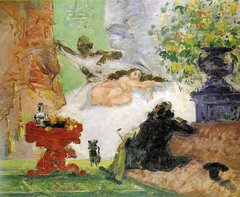
Selasa, 06 Desember 2005

New smARThistory website and Edublog award shortlist

While this blog may hopefully have some value in its natural additive or sequential form, it may also be useful to offer a more static companion website. The smARThistory website includes a floorplan of the Metropolitan Museum of Art in New York and locates the works of art that are the subjects of our podcasts. Our intent is that these podcasts are uploaded to mp3 players and then played in front of the original object. This takes advantage of the mobility of this technology and truly breaks down the walls of the classroom, but to what advantage? Surely, primary to the technology that we all take for granted is the infinite reproducibility of text and image. Is it perversely archaic to return to the singular historical object? Or, is there value to be had from marrying the two?

Just prior to the opening address of the annual SUNY TLT conference, Michael Feldstein, Assistant Director of Blended Learning for SUNY Learning Environments and author of the superb blog, E-literate, leaned over and said, “congratulations!” I was, as is often the case, confused. Michael kindly explained that this blog has made the Edublog 2005 Awards Short List for blog for best Audio and/or Visual Blog. Yikes! Please feel free to vote for us!

We will post the outline of our talk tomorrow on pod- and vod-casting just as soon as it is written.

Jumat, 02 Desember 2005

Holbein vodcast


Here is our second attempt to create a vodcast, in this case a conversation about a work of art, using Camtasia.

Click here to listen and watch.

Selasa, 29 November 2005

Edouard Manet's Boating (1874) at the Met


Here is our podcast of the beautiful painting by Manet of a couple boating on the Seine in the suburban town of Argenteuil.

Right click here to download or use the player below to listen.


Minggu, 27 November 2005

modeling learning?

"Educators therefore face a different set of challenges. Very different. Their authority is in question since we've learned that we can learn more from talking with others than by listening to any single expert. But, more important, if knowledge emerges from conversations, then just about all our educational focus ought to be on learning how to be good conversationalists: how to listen, how to kindle a conversation, how to evaluate claims, how to speak in a voice worth hearing... and, most of all, how to share a world in which knowledge is plural, for that's what conversation – and knowledge – is about."
From David Weinberger, "Knowledge in Transition: How access is changing the very Nature of Technology," in Interactive Educator, Autumn 2005 via Weblogg-ed

Some thoughts today about conversations -- modeling conversations is what we were able to do in our podcasts and in our camtasia videos. And if teaching is more about modeling learning than about content delivery, and learning happens in conversations with many sources, then our podcasts and screencasts model learning in an important way...

Jumat, 11 November 2005

Gustave Courbet's Young Ladies from the Village (1852) at the Met

Here's a brief discussion of a seemingly ugly painting by Courbet of three young women distributing alms to a young peasant girl in rural France, exhibited at the salon of 1852. The Daumier print below, The Bourgeois at the Salon, points out the irony of the "high" art at the salon while also poking fun at the well-dressed man who makes a real effort to grapple with it.


Right click here to download the mp3 or use the player below to listen to the podcast.


Sabtu, 05 November 2005

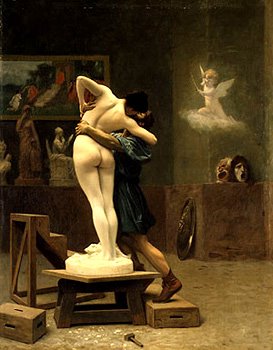
On Jean-Leon Gerome's Pygmalion and Galatea at the Met


I couldn't help but add the quotes below to accompany our discussion of Gerome's Pygmalion and Galatea in the Metropolitan Museum of Art.

Ovid's Metamorphosis:

Pygmalion had seen them, spending their lives in wickedness, and, offended by the failings that nature gave the female heart, he lived as a bachelor, without a wife or partner for his bed. But, with wonderful skill, he carved a figure, brilliantly, out of snow-white ivory, no mortal woman, and fell in love with his own creation. He marvels: and passion, for this bodily image, consumes his heart. Often, he runs his hands over the work, tempted as to whether it is flesh or ivory, not admitting it to be ivory. he kisses it and thinks his kisses are returned; and speaks to it; and holds it, and imagines that his fingers press into the limbs, and is afraid lest bruises appear from the pressure.

The day of Venus’s festival came...when Pygmalion, having made his offering, stood by the altar, and said, shyly: “If you can grant all things, you gods, I wish as a bride to have...” and not daring to say “the girl of ivory” he said “one like my ivory girl.” Golden Venus, for she herself was present at the festival, knew what the prayer meant, and as a sign of the gods’ fondness for him, the flame flared three times, and shook its crown in the air. When he returned, he sought out the image of his girl, and leaning over the couch, kissed her. She felt warm: he pressed his lips to her again, and also touched her breast with his hand. The ivory yielded to his touch, and lost its hardness, altering under his fingers....The lover is stupefied, and joyful, but uncertain, and afraid he is wrong, reaffirms the fulfilment of his wishes, with his hand, again, and again.

____________________________

Claribel Alegría, “Galatea Before the Mirror”:
my perfection isn’t mine
you invented it

I am only the mirror
in which you preen yourself
and for that very reason
I despise you.

_____________________________________

Simone de Beauvoir:

When I started writing -- it wasn't exactly memoirs, but an essay on myself -- I realized that I needed first of all to situate myself as a woman. So first I studied what it meant to be a woman in the eyes of others, and that's why I talked about the myths of woman as seen by men; then I realized it was necessary to go deeper to the heart of reality, and that is why I studied physiology, history, and the evolution of the female condition."
___________________________

Right click here to download the podcast or use the player below.


Sabtu, 22 Oktober 2005

Different kinds of images to teach art history -- from Flickr

Masaccio's "Tribute Money"
Masaccio's "Tribute Money",
originally uploaded by adamtart.
One of the issues that came up during our presentation in the CET yesterday was using Flickr in class -- I used the annotation feature in Flickr to have students comment on the works of art that we were studying. Steven is using it this semester in his NYC architecture class. Students, armed with digital cameras or cell phone cameras take pictures of the city that relate to the material they are studying. Used in this way, as Steven explained, the instructor gets to see what the students are seeing, what catches their eye, what interests them. It bring class into everyday life in the city -- and the city into class in a more meaningful way.

Another way of using Flickr images that we have been thinking about is using photos like this one -- taken of major art historical monuments (like the Brancacci Chapel featured here) from a specific (tourist) viewpoint. What is valuable here is that we have a sense of the moment -- of the way these works of art are experienced in the early 21st century. As art historians, we are used to discussing the art in class isolated from any context (a common criticism of the museum) -- on a black background, viewed from straight on -- most likely not a view of the work of art that anyone ever had! What we show in art history class is therefore analogous to the divine view of the middle ages -- a view that showed us the world in a way that human beings, with their single, moving viewpoint never see. Photos like this one make us think about a new way of teaching art history, one that emphasizes the bodily/experiential/contextual aspect of viewing.
I've been collecting these in "My Favorites."

Jumat, 21 Oktober 2005

Camtasia adventure


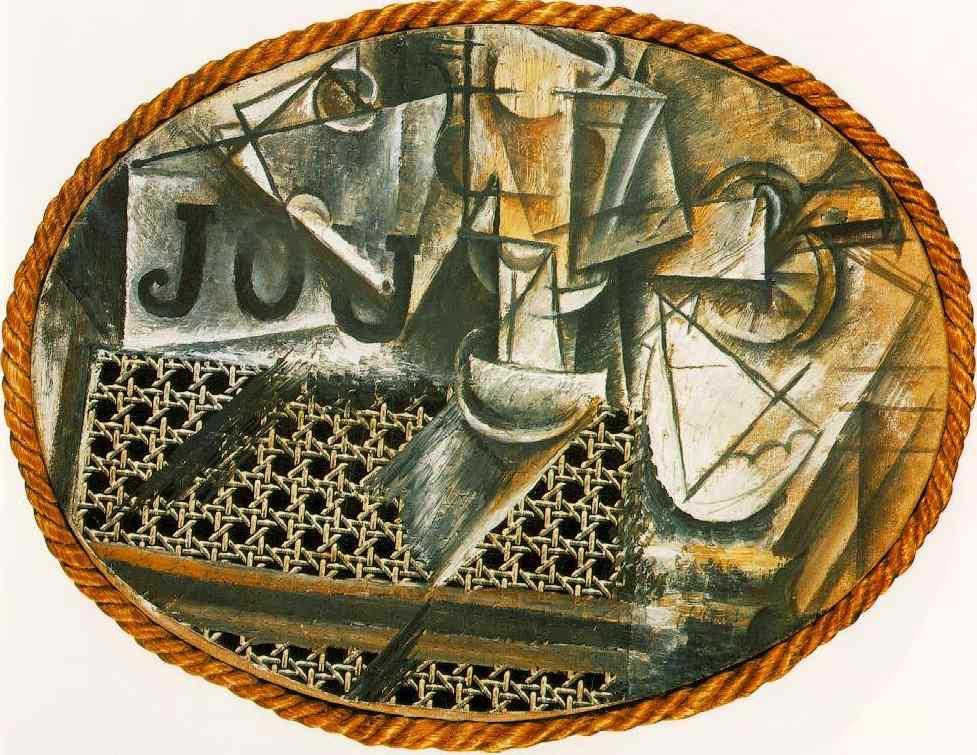
My fortune cookie today was uncanny, “Old associates lead to new adventures.” It was discarded after a lunch celebrating a terrific collaborative effort between myself, Eric Feinblatt and Beth Harris. We met together just an hour or so prior to our scheduled presentation in FIT’s CET (Center for Excellence in Teaching—our technology lab for faculty development). We were scheduled to discuss uses of multimedia in teaching and we were prepared to discuss exploratory work we had done using a variety of tools in the context of our own courses. These tools include Flickr, podcasting (using Audacity), and some preliminary work done with Camtasia. But Beth, in a flash of brilliance, suggested that we combine Camtasia with ARTstor’s OIV (offline image viewer) to move beyond the podcasts we’d already created at the Metropolitan Museum of Art for our online courses. We quickly settled on Picasso’s Still Life with Chair Caning as our initial victim. This, because I will soon be covering it in my online course, and I have found this collage especially difficult to adequately convey to my students. In our podcasts, Beth and I had stood before a painting in the museum, IPod with mic attachment in hand, and offered our students a spontaneous conversation about the work of art. What resulted was an unscripted discussion with a wonderful sense of discovery as each of us prompted the other to look anew.

So the three of us sat down and we were now able to go significantly further than we’d been able to in the museum. Thanks to the OIV, some forethought, and Google, we were able to significantly reinforce our discussion with collateral images. Further we were able to zoom in and record our mouse movements--used largely as a pointer. This is an important advantage over simply placing descriptive text near the image and hoping the student can connect the two. The result, like with the podcasts, was an easy give and take that was meant to model for our students, the ways they might begin to freely explore works of art.

As the three of us went to lunch after the presentation, we mused that if we created a Camtasia file with subsidiary documentary material, our students or anyone with a video IPod could stand in front of a painting in a museum and not only hear our analysis but also see sketches, variations and other supporting materials, truly creating a classroom without walls.

Click here for the Camtasia video

Senin, 17 Oktober 2005

Small Tools / Big Ideas Conference at FIT

Now that the dust has settled, we wanted to blog about our October 7th conference held at FIT. The premise of the conference was to understand the relationship between digital repositories -- specifically image repositories -- and the plethora of possible instructional tools that could make the repositories spaces for active learning. There were over 180 participants from more than 75 institutions across the country. Rachel Smith, from the New Media Consortium began the day with a keynote that reminded us that what we think of as technology is simply a normal part of our student's natural environment and that we, as educators, should not cling to a sense of its newness and artificiality, but allow what we think of as "technology" to become as invisible as it is to our students.

The morning session, "Big Ideas," looked at a variety of different types of repositories.

Barbara Taranto, Director of the Digital Library Program at the New York Public Library talked about the incredible success of that project which averages over half a million hits a day. The images on the digital gallery may be freely downloaded for personal, research and study purposes. Barbara lauded the variety of new and different contexts in which these images could now appear and pointed to the ways in which, on sites like Flickr, the images were sometimes stripped of their metadata and decontextualized. Barbara posed this as an issue, asking us to think about what happens to the meaning of an image, and the uses it might be put to, when it is removed from its context. In essence, she pointed out that this use of images, which is already rampant, could be further magnified as images become a kind of free currency disassociated from their sources and original uses. Using wikipedia as a model, Barbara suggested that informed communities could make it their responsibility to enhance the meaning of these untethered images.

What fascinated us about Richard Baraniuk's (Director of the Connexions Project at Rice University), talk was not just the learning object repository and builder that allows faculty to, in essence, share learning objects that they've created, and reconfigure them as courses, but also, the way in which this was going to impact the textbook publishing industry. Rich mentioned Lulu -- and the idea that faculty could now self-publish these recombined learning objects (covered by creative commons licenses) and distribute them through Amazon. We were particularly impressed that Thomson publishing was on-hand as a sponsor to engage in a continuing dialogue about the future of textbook publishing. In fact, since we both teach art history online, and therefore have essentially written course texts, we are thinking about publishing via this new medium.

Although faculty will draw from a variety of image repositories -- those that are institutional and those that are licensed (like Artstor), it is clear that they will continue to develop and maintain their own individual collections. The project Henry Pisciotta (Arts and Architecture Librarian at Pennsylvania State University and member of the Advisory Board of LionShare) talked about -- Lionshare -- allows faculty to share images among eachother and across institutions using peer-to-peer software that can authenticate users and allow for federated searches.

Carl Jones and Ben Brophy, from the Massachusetts Institute of Technology Libraries talked about the intersection between the repository that MIT developed, DSpace (which is not configured well for images) and Stellar, MIT's learning management system. We were particularly interested in their efforts because of SUNY's work with uploading images from two SUNY campuses into DSpace to create a pilot digital image repository that can be shared across the 64 campuses of the State University of New York.

After eggplant parmesan and some collegial chit chat, we reconvened for the second panel, "Small Tools," moderated by Michael Feldstein. Our idea here was to discuss tools that are important to making the image repository a learning environment and also to emphasize the necessity for interoperability. In our opening remarks, we used the metaphor of the repository as a planet orbited by different tools, that could be used as needed by faculty. The tools we focused on were an image annotation tool developed by Columbia's Center of New Media Teaching Teaching and Learning (not currently available outside of the Columbia community), Tuft's VUE, SFMoMA'sPachyderm, and Scholar's Box.

At the end of the day, in the roundtable, Carey Hatch, Assistant Provost for Library and Information Services at SUNY, asked the participant (representatives from FIT, Artstor, MDID, and Almagest) to talk about integrating these tools within a digital repository based on their real-world experiences.

Jumat, 07 Oktober 2005

A Picture Share!

A Picture Share!
A Picture Share!,
originally uploaded by beth h..

Minggu, 18 September 2005

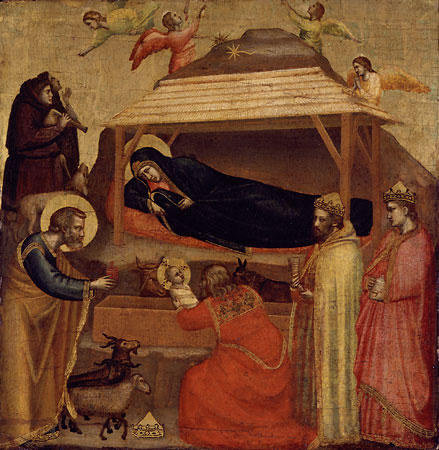
Giotto's Epiphany (The Adoration of the Magi) at the Met


Yet another podcast about a beautiful painting by the great trecento artist, Giotto.

Click here to listen.

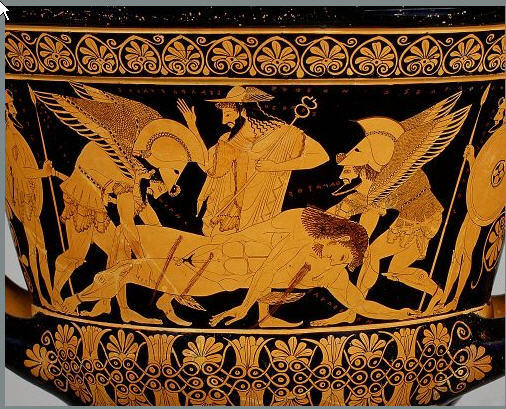
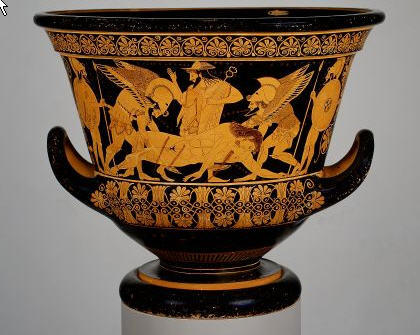
A podcast about an Ancient Greek Vase at the Metropolitan Museum of Art

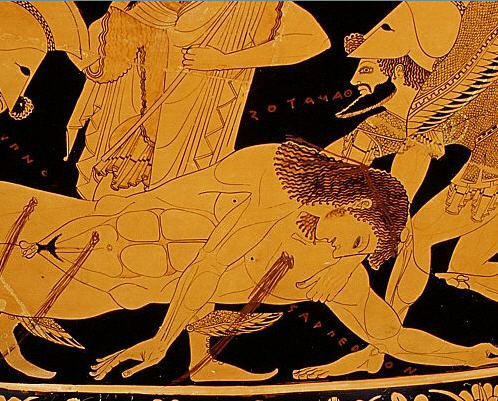
This next podcast is about the Attic red-figure painting of the fallen hero Sarpedon on an ancient Greek calyx-krater from the archaic period (ca. 515 B.C.), painted by Euphronios.
We discuss the shift from black-figure painting to red-figure, and the gradual move away from the archaic style, which was influenced by the ancient Egyptians, to the more naturalistic style of the classical period.
Right click here to download the Podcast or listen using the player below.


My Odeo Channel (odeo/140a758b88e02a51)

Sabtu, 03 September 2005

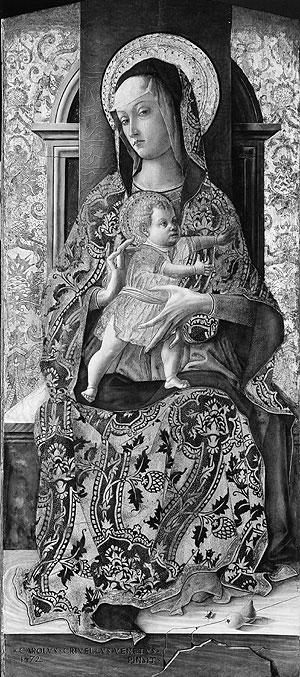
Carlo Crivelli Podcast


Here, in our second podcast attempt, we discuss one of the Carlo Crivelli's at the Met. Right click here to download the mp3 or listen with the player below.


podcast beta

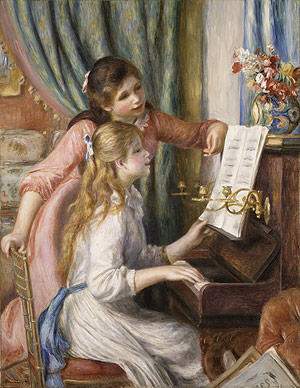
Pierre-Auguste Renoir, Two Young Girls at the Piano, 1892 (Robert Lehman Collection, Metropolitan Museum of Art)

This is our first attempt to publish a renegade museum audio guide, inspired by the folks at Marymount Manhattan College --http://mod.blogs.com/art_mobs/
Any opportunity to undermine the museum's deadly meta-narratives is enormously appealing and so we couldn't resist.

We are particularly interested in the potential for podcasting in higher education, and specifically for distance learning.

Please right click here to download the mp3 or listen to the podcast on the player below, and let us know what you think.


Jumat, 29 Juli 2005

My first use of Flickr in class: Campin's Merode Altarpiece

Here's my first use of Flickr in my online Survey of Art History class. Students added comments and most importantly, added their own annotations to this image and other details of the Merode Altarpiece. A successful experiment -- but difficult to keep track of student work (some students didn't follow my instructions to choose a username that I would recognize), and of course one or two students just had trouble using Flickr. But all in all, I think they enjoyed it.
Related Posts Plugin for WordPress, Blogger...